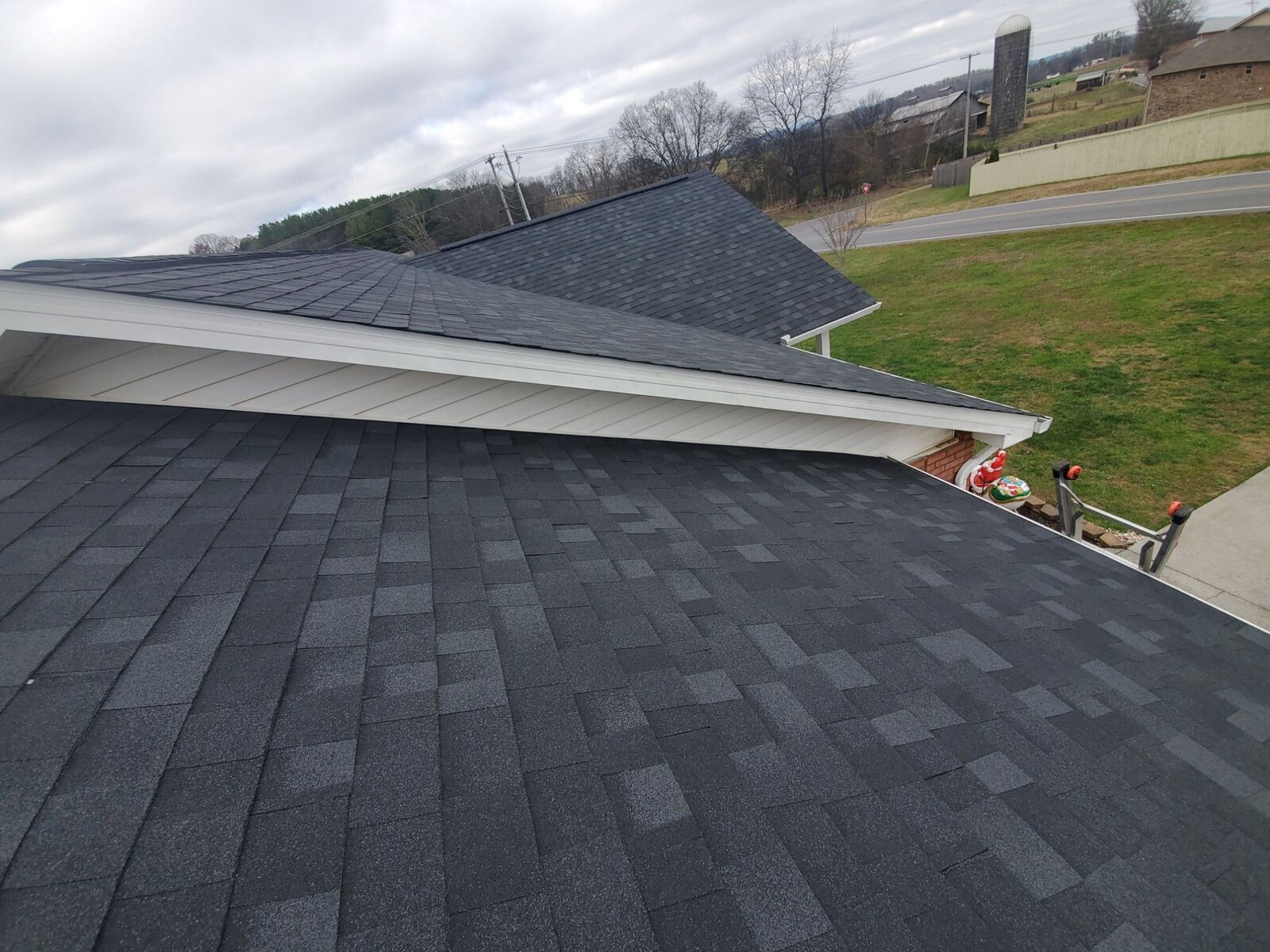
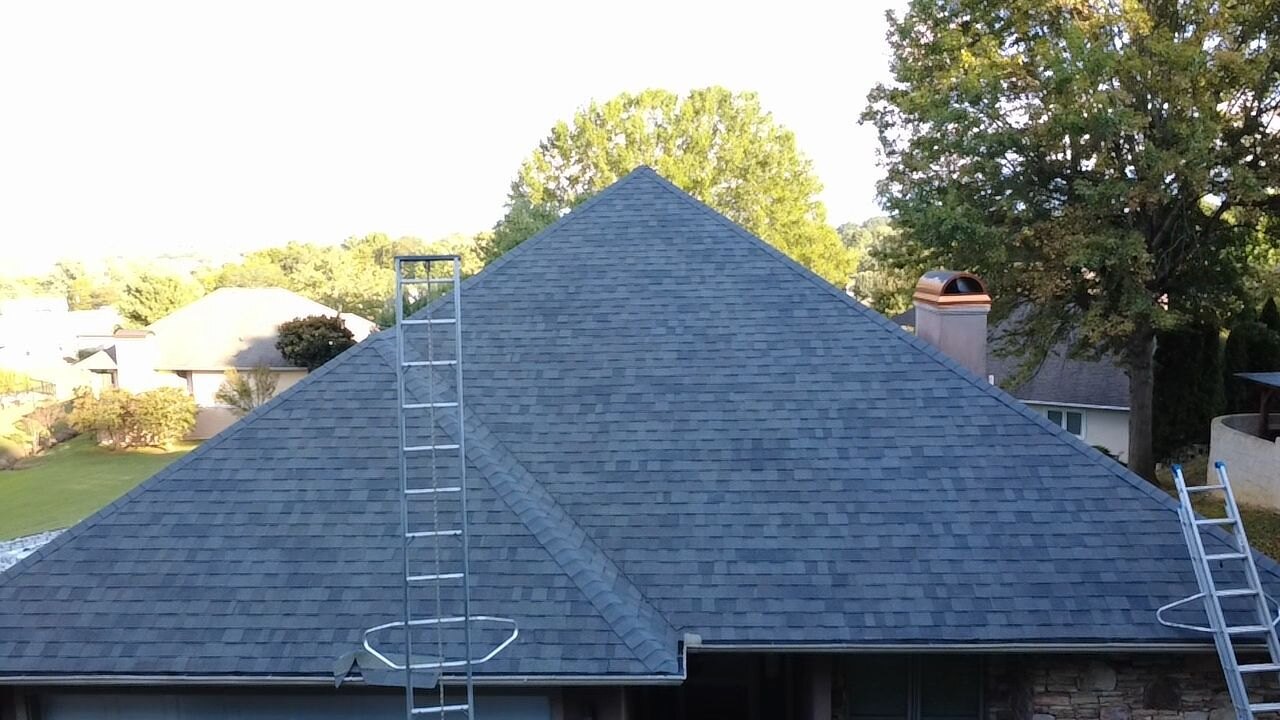
Every fall we get the same question from homeowners around Knoxville, Maryville and Sevierville. The leaves are coming down, the gutters are filling up, and nobody wants to clean them twice. So when is the right time?
The short answer is that there is no single right weekend. East Tennessee trees drop their leaves over about seven weeks. Wait for the last one and you are cleaning gutters in December. Go too early and you are doing it again by Thanksgiving.
Here is how we think about the timing, the signs your gutters are already clogged, what overflow does to a roof over the winter, and an honest take on gutter guards.
Why the timing of gutter cleaning matters in East Tennessee
Leaf drop here runs from the middle of October into early December. Maples, poplars and dogwoods go first. The oaks hold on longest, and on wooded lots in Hardin Valley, Seymour and the Sevier County hills, oaks are often the biggest trees over the roof. Some keep dropping into December.
That spread is why chasing every leaf does not work. A gutter cleaned on November 1 can be packed again two weeks later if there is a white oak overhead.
Our advice is to plan on two cleanings instead of one perfect one:
- First cleaning when most of the leaves are down. For most of our area that is the second or third week of November, once the early trees are bare and the heaviest part of the drop is over.
- Second cleaning after the oaks finish. Usually the first or second week of December. This one is lighter, and it is the one that sets your gutters up for winter rain.
If you only have room for one cleaning, make it the late one. A gutter that goes into January clean will handle the long, soaking rains we get in winter. If you have no oaks at all, one cleaning in late November is usually enough.
Signs your gutters are already clogged
You do not need to climb anything to know whether your gutters are full. Wait for a steady rain, step outside with an umbrella, and look.
- Water pouring over the front edge. A working gutter carries water quietly to the downspout. A sheet or stream coming over the lip means something is blocking it.
- Water running down the siding or behind the gutter. Look for a wet streak on the wall below the gutter.
- Downspouts that trickle or run dry. If the gutter is full but the downspout is barely running, the outlet or elbow is plugged.
- Sagging or pulling away from the house. Wet leaves are heavy. A gutter that has started to bow has been carrying weight it was not built for.
- Granules at the downspout. Look at the splash block after a rain. A little grit is normal. A pile of sand-like shingle granules means the gutter is catching what is washing off an aging roof, and that is worth mentioning the next time someone looks at your shingles.
Between rains, look at the roofline from the yard. Leaves mounded in the inside corners of the roof usually mean the gutters below are full too.
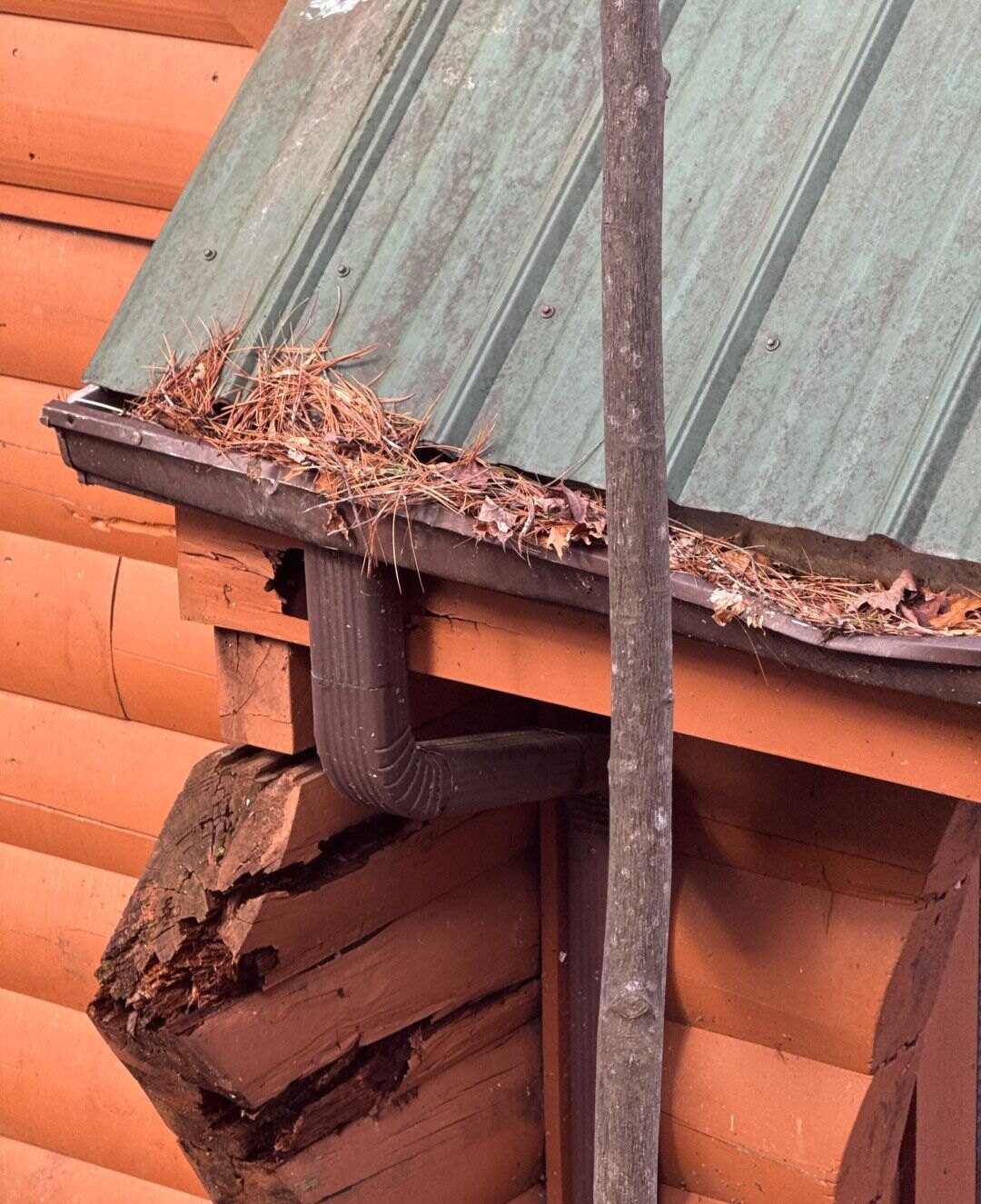
The cabin in the photo above is a good example. The gutter is full of needles, and the log below it has been taking the overflow for years.
What overflowing gutters do to your roof edge and fascia
A clogged gutter changes where water goes, and over a wet East Tennessee winter that adds up.
The fascia rots. The fascia is the board the gutter hangs on. When the gutter is full, water sits against that board for days instead of draining away. Once the wood goes soft, the hangers lose their grip and the gutter pulls loose. Most of the fascia we replace rotted behind a gutter that overflowed for a few seasons.
The roof edge stays soaked. Water backed up in a full gutter can wick under the first course of shingles and sit on the drip edge and the edge of the decking. That bottom edge is one of the most common places we find rotten plywood during a replacement.
The foundation takes the water. A gutter's whole job is to carry roof runoff away from the house. When it overflows, that water lands in a line along the foundation instead. That means wet crawl spaces and washed out beds.
None of this happens in one storm. It happens over a few winters of the same gutter overflowing in the same spot.
Are gutter guards worth it for your trees
We install gutter guards, so we have a stake in this, and we will still give you the straight version.
Good guards cut down on how often gutters need attention. They keep whole leaves and most twigs out, and they stop the kind of clog that blocks a downspout. What they do not do is end maintenance. Pine needles, maple seeds and shingle granules still find a way in, and leaves can mat on top and need rinsing off. Anyone who says you will never think about your gutters again is overselling it.
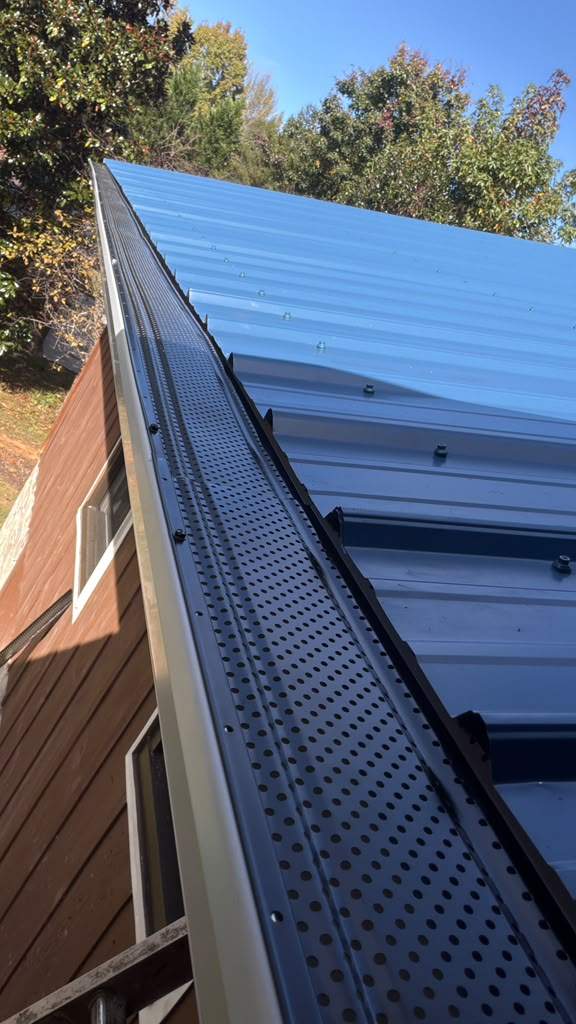
Where guards earn their keep is under heavy tree cover. If your house sits under oaks and you are facing two or three cleanings every fall, guards can turn that into a quick look once a year. If your house is on an open lot with a tree or two, guards are a convenience, not a necessity.
Before you buy, make sure the guard is installed so it does not lift the first row of shingles or trap water against the fascia, and ask how it handles heavy rain. A guard that sheds water over the front in a downpour is not doing the job.
When to call a roofer instead of getting on a ladder
Plenty of homeowners clean their own gutters on a single-story house, and that is fine on a dry, calm day with the ladder on firm, level ground and someone else at home. If any part of that gives you pause, hire it out. It is not worth a fall to save a service call.
Call a professional instead if:
- Your house is two stories or more. The ladder gets tall and the cost of a mistake goes up fast.
- Your lot is steep or uneven. A lot of homes in Sevier and Blount counties sit on hillsides with no level place to set a ladder on the downhill side.
- You are not comfortable on a ladder. That is reason enough.
- The fascia looks soft, stained or peeling. Dark streaks, bubbling paint or a gutter pulling away from the house usually mean the board behind it is rotting, and cleaning will not fix that.
- The roof edge sags or shingles are lifting at the eave. That points to water already getting under the edge.
- There are a lot of granules at the downspout. Granule loss is an aging sign, and it is worth having someone look at the whole roof while they are there.
When we come out for a gutter cleaning or a guard installation, we look at the fascia, the drip edge and the first few courses of shingles at the same time. If something is wrong, you get photos and a plain explanation. Often the answer is that your gutters just needed cleaning. Sometimes it is a fascia board that should be replaced before winter.
Brian King Roofing has been a family business in Seymour since 1991, and we install and service gutters and gutter guards across Knox, Sevier, Blount and Anderson counties.
If your gutters are overflowing or you would rather have someone else handle the ladder this fall, call us at 865-573-6859.
Ryan King Brian King Roofing, Inc. Trust the roof over your head.